Excerpt published with permission from Answers Magazine 10, no. 4: 56–62
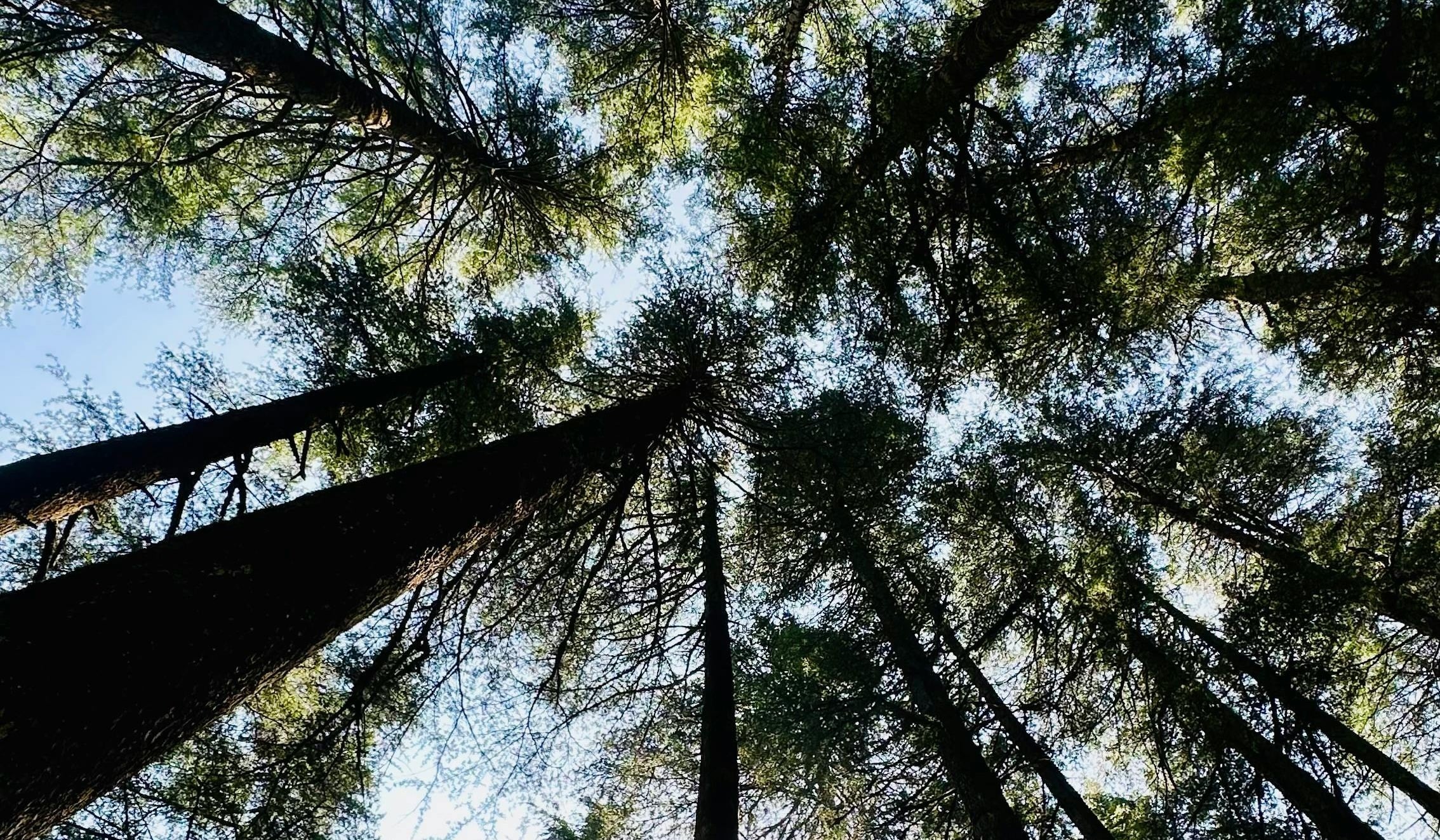
I have loved the outdoors ever since my dad first took me camping with the Cub Scouts. On the last day of our trip in upstate New York, we left the forest for the car, and I began to cry. My father ran to me and said, “What’s the matter, Tommy; are you homesick?” To which I replied as tears poured down my cheeks, “I don’t want to go home! I want to stay!”
That first experience opened a floodgate of natural adventures, canoeing amidst the shroud of morning mists, walking with bears, skiing under Alaska’s northern lights, and being serenaded by Eastern wolves.
In nature, I sensed something “divine” and greater than myself, whether I walked on a lonely beach or listened to the chatter of animals in the forest at night. I felt there was something sacred and spiritual about nature worth saving, even worshipping.
I easily related to the views of pantheists and pagans. My goal in life was to live away from people and become one with nature. I was horrified by the doomsday scenarios about what mankind is doing to nature.
Starting in forestry college, I was confronted with the reality of the one and only God. When I fell in love with my Savior Jesus Christ, my affections were completely refocused. This new relationship with the Creator started me on an odyssey to determine whether He really cares about creation and if so, how He wanted me to respond.

A Transition of Affections
I had to rethink everything. Before knowing Christ, my affections had revolved around earth’s beauty and her creatures. Because of my background in biology, I saw how all organisms were interrelated. I believed they all had inherent worth because they’ve struggled millions of years, so all had a right to protection, not just humans.
I also focused on the interconnectedness of nature and how our survival depends on being in harmony with nature. My biological training was in evolutionary naturalism. I “knew” that, if nothing else, spaceship earth was all there was, and we must do all in our power to save her.
As my relationship with the Creator grew, I rejected my belief in the natural world as the source of all value. But did I have to accept the opposite view, that the only purpose of nature is to serve the greater good of mankind?
The only way to determine God’s perspective is for God Himself to communicate it to us, and He’s done this in the Bible. Its message centers on the life and redeeming work of Christ (Luke 24:27).
Like a boat floating aimlessly without navigation equipment, our world is morally adrift without Christ, never knowing how to navigate a course that addresses creation issues in a way that brings glory to Christ. When I realized that the sense of the divine was not coming from nature itself but from the Creator behind it, I was awed and refocused.
Christ’s Role for Humanity in Creation
The culmination of God’s handiwork is proclaimed in Genesis 1:31. God looked at all He had made and declared it “very good.” God was pleased with what He had made because it was exactly as He wanted. All creation was aligned and working together, while being dependent upon the Maker.
The apex of God’s creativity is man, a creature different from all others because he is formed in the Maker’s image. Creation is not “very good” because of man alone. Man isn’t the major emphasis but is the crowning jewel of a bigger, integrated picture, which God pronounced “very good.” Christ gave flowers and sparrows value and compared them with His Father’s greater love for man (Matthew 6:25–34).
Some evangelicals turn to Genesis 2:15 to explain man’s role in creation: “Then the Lord God took the man and put him in the garden of Eden to tend and keep it” (italics added). They point out that tend means “to serve” and keep means “to take care of,” concluding that man’s purpose is to serve the garden (nature) and protect it so that it becomes productive. These definitions for these words are possible, and there is an element of truth in caring for the land because God gave it as a provision for His creatures’ physical needs. Yet there is something much deeper.
The Garden, the Tabernacle, and the Temple have some interesting similarities in the Bible. The Hebrew words for tend and keep were also used for the priests of God in the temple (Numbers 3:7–8). As the priest of creation, Adam was to work and keep the Garden in obedience to God and for His glory. He apparently was to make the Garden a place of continual worship for himself and then other image bearers.
We can be good or bad stewards, but woe to those who do not properly manage the precious belongings in a manner reflecting the owner’s heart (Luke 12:43, 16:1–2; 1 Corinthians 4:1). We are called to be priests and shepherd kings, as we reflect the heart of our shepherd God through our worship, obedience, and drawing others into worship of Him (1 Peter 2:9; Psalm 23:1; John 10:11–16).
Today’s environmental issues are symptoms of a much more tragic situation. Man no longer trusts or depends on Jesus to navigate through life. Pantheism, biocentrism, and evolutionary atheism are at the heart of the environmentalism movement. Many “exchange the truth of God for a lie” and worship created things rather than the Creator Christ (Romans 1:25). The injustice is not against the planet; it is against a holy God.
A Better Time and Place
So God entered His creation in flesh. Christ Jesus lived a perfect life and took upon Himself the full wrath that was pronounced against us. When we trust in Him for salvation, God breaks the power of sin in our lives, reconciles us to the Creator, and restores us for His original purposes of worship and obedience.
Scripture also speaks of a new heaven and new earth that is coming (2 Peter 3:3–13). Satan will not thwart God’s original plan, and God will triumph by bringing to fruition what He initially started “in the beginning.”
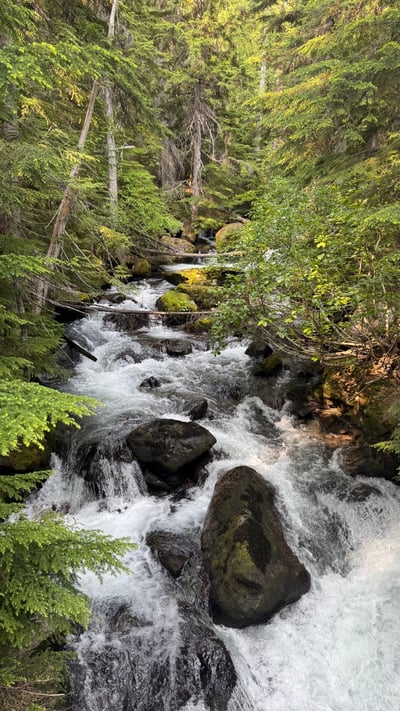
Today, I enjoy my long hours in the mountains, woods, and streams more than ever because there I find it easy to worship my Creator and Savior. As a biologist and a teacher, I bring students out into the field with me. I can point them to many physical illustrations of God’s qualities, including life, beauty, and provision. If students go back into the field and remember our discussion of the beauty of a flower or the ecological processes that provide our physical needs, I pray it will lead them into worshipping their Creator.
Yes, God has given creation worth beyond its usefulness to man. He has designed it so that we can recognize in creation His attributes that refocus our worship back to Him. And He has created us to represent Him. If these things are so, then God does care about His creation, and He wants us to respond accordingly.
Looking for spiritual support? You’re not meant to walk alone. Stay connected with the Medi-Share blog for uplifting articles, useful tips, inspirational stories and helpful resources to support you on your journey with God.

Tom Hennigan is associate professor of biology at Truett McConnell University, where he teaches organism biology and ecology. He is coauthor of the edition of...